Description
EP400 Planetary Track Drives
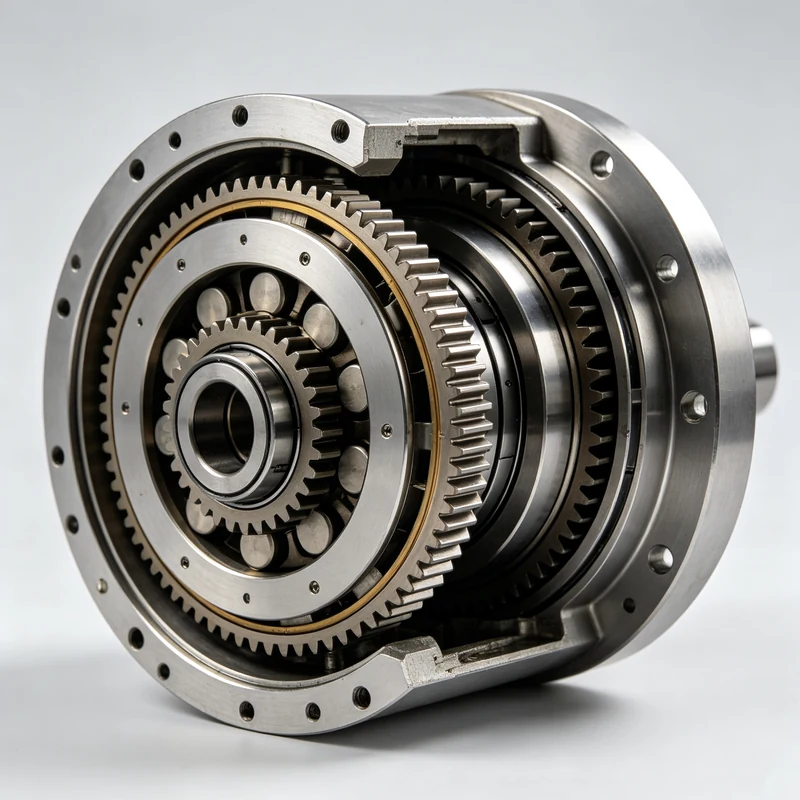
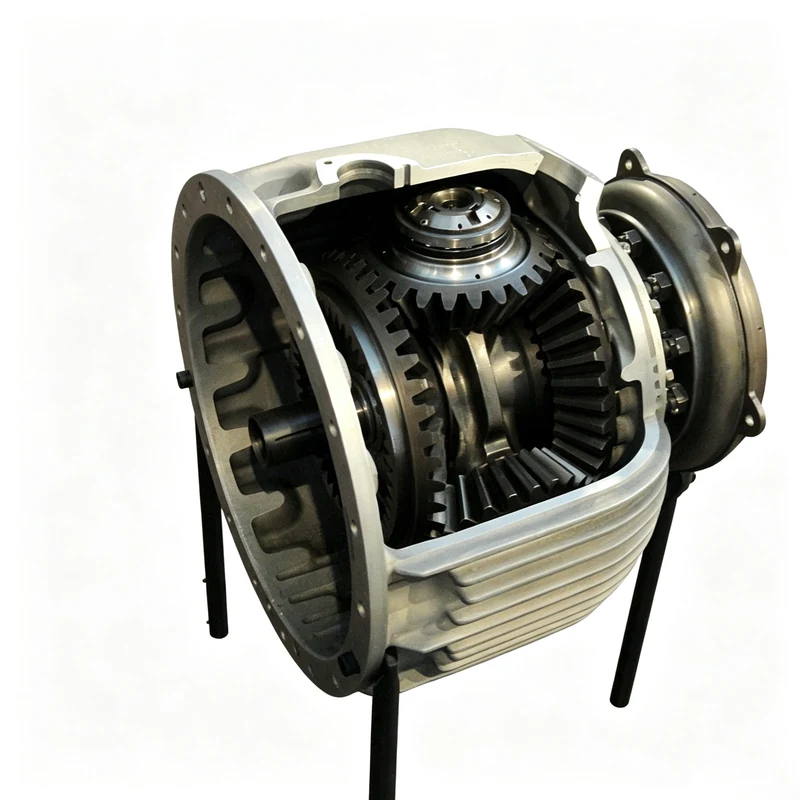
EP400 track drives are built around a rotating housing flange that integrates the final reduction close to the tracked undercarriage. The architecture is intended for hydraulic travel systems where high wheel or sprocket torque must be packaged inside a compact final-drive envelope.
Published Range
| Parameter | Published EP400 Family Range |
|---|---|
| Output torque | 1,000–220,000 N·m |
| Gear ratio | 5.3–365 |
| Support arrangement | Rotating housing flange for tracks |
| Motor interfaces | Axial-piston hydraulic motor; hydraulic orbit motor |
| Hydraulic options | Pressure-relief and overcenter valve on request |
| Parking brake | Hydraulic-release parking brake on request |
Travel-Duty Priorities
Track propulsion combines low output speed, high torque, frequent load changes, and contamination exposure. Selection therefore starts with machine mass, tractive effort, sprocket radius, travel speed, gradeability, hydraulic motor displacement and pressure, then checks braking and shock-load margins.
Integration Checklist
| Check | Why It Matters |
|---|---|
| Track sprocket geometry | Defines bolt circle, pilot, and output support loads |
| Hydraulic motor flange | Controls adaptor and input-spline compatibility |
| Brake requirement | Determines parking and holding function |
| Case drain and valves | Affects hydraulic protection and control |
| Duty and gradeability | Drives service factor and peak torque |
| Sealing environment | Dust, mud, water, and washdown influence protection |
Failure Risks
Undersized travel drives can suffer gear tooth overload, bearing distress, overheating, or brake margin problems. Incorrect case-drain routing and valve selection can also damage hydraulic seals. Provide the complete travel circuit and existing final-drive data when replacing another unit.
FAQ
Can EP400 work with an orbit motor?
The published range lists hydraulic orbit motors and axial-piston hydraulic motors as applicable inputs.
Is a brake always included?
No. A hydraulic-release parking brake is an option and must be specified when required.
How is the ratio selected?
Use motor speed, target track speed, sprocket geometry, and required tractive torque; then verify the selected drive against duty and shock load.
Can I select from machine weight alone?
No. Weight is only one input. Travel speed, grade, sprocket radius, hydraulic pressure, duty, and dynamic loads are also required.
Data Note: Published EP400 family torque, ratio, motor, valve, and brake information is sourced from the official Ever-Power track-drive product page.
Size A Track Drive
Share ratio, input speed and power, required output torque, duty cycle, mounting space, shaft or flange interface, environment, quantity, and any drawing or existing gearbox reference. Our engineering team will review the configuration before quotation.