Description
EP600 Planetary Wheel Drives
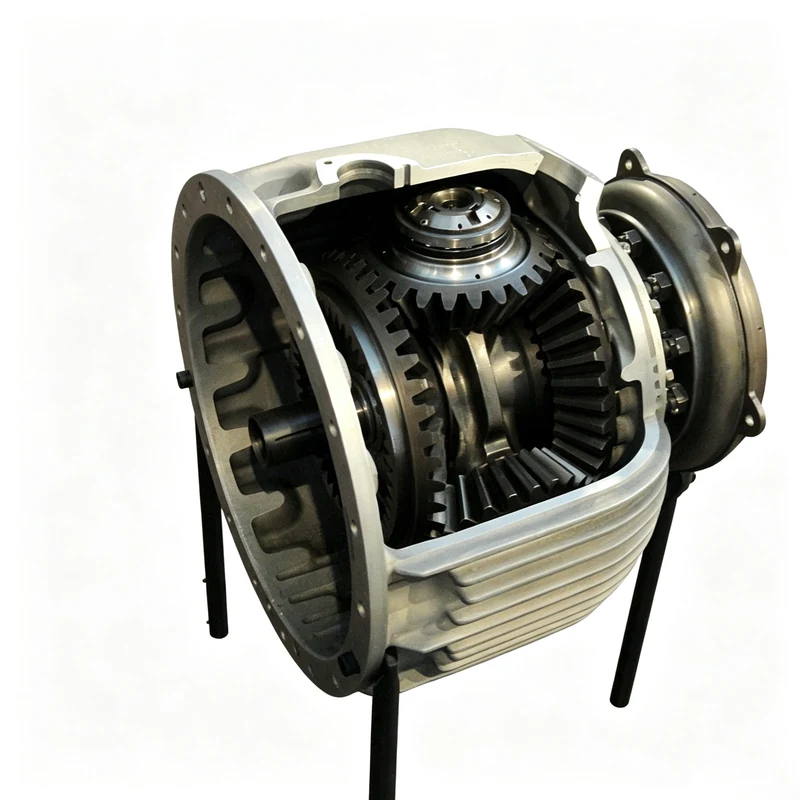
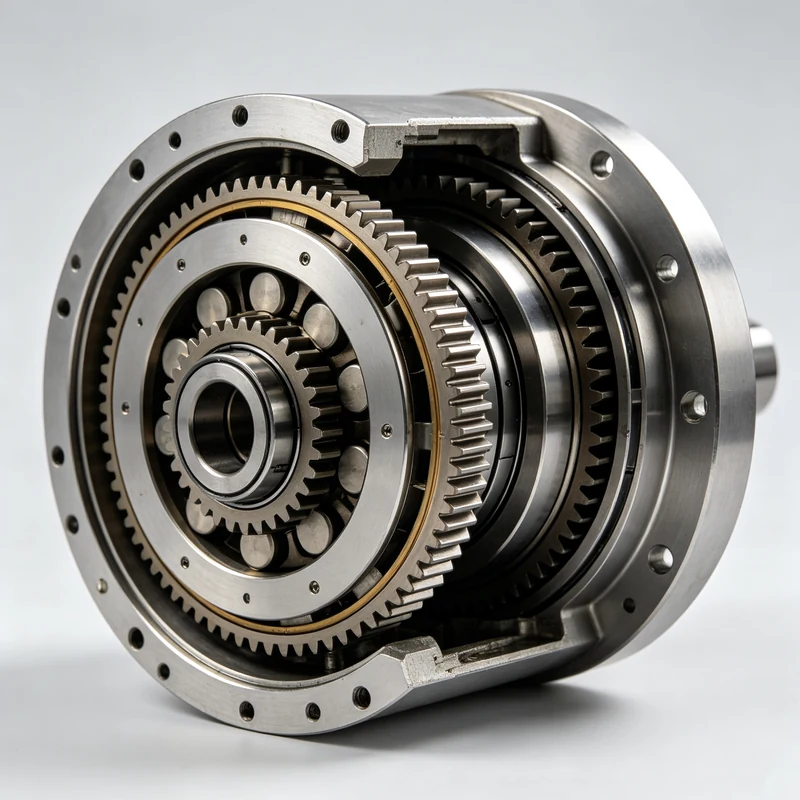
EP600 wheel drives place the planetary reduction at the wheel or drum, allowing a compact rotating-housing arrangement and high torque at low vehicle speed. They suit mobile equipment where packaging, radial support, and hydraulic integration are central to the final-drive design.

Published Range
| Parameter | Published EP600 Family Range |
|---|---|
| Output torque | 1,750–60,000 N·m |
| Gear ratio | 5.8–160 |
| Support arrangement | Rotating housing flange for wheels and drums |
| Motor interfaces | Axial-piston hydraulic motor; hydraulic orbit motor |
| Hydraulic options | Pressure-relief and overcenter valve on request |
| Parking brake | Hydraulic-release parking brake on request |
Wheel-Drive Sizing
Start from gross vehicle mass, wheel radius, desired drawbar pull, maximum grade, acceleration, and road speed. Convert the tractive requirement into wheel torque, then match hydraulic motor displacement and ratio while keeping motor speed and pressure inside the intended operating window.
Mechanical Interface
The rotating-housing architecture means wheel or drum attachment, pilot diameter, bolt circle, bearing loads, and available axial space must be checked together. If this is a replacement, send the original flange drawing and measurements rather than selecting from torque alone.
RFQ Data
| Vehicle Data | Drive Data |
|---|---|
| Gross and axle load | Required continuous and peak wheel torque |
| Wheel or drum radius | Target output speed |
| Maximum gradient | Hydraulic motor type and displacement |
| Acceleration expectation | Motor flange and input spline |
| Duty cycle | Brake, valve, and sealing requirements |
FAQ
What makes a wheel drive different from a track drive?
Both are compact planetary final drives, but the output support and attachment are optimized for their different wheel, drum, or track interfaces.
Can the unit include a parking brake?
A hydraulic-release parking brake is listed as an option and should be specified during sizing.
What ratio should I choose?
Ratio follows from motor speed, wheel speed, tire or drum radius, and the required torque. The hydraulic operating point must be checked at the same time.
Do you need my existing drawing?
For replacements, a drawing or detailed measurements greatly reduce interface risk and help confirm bolt circles, pilots, splines, and offsets.
Data Note: EP600 family range and configuration information is based on the official Ever-Power wheel-drive listing. Exact model dimensions require the relevant dimensional sheet.
Review A Wheel Drive
Share ratio, input speed and power, required output torque, duty cycle, mounting space, shaft or flange interface, environment, quantity, and any drawing or existing gearbox reference. Our engineering team will review the configuration before quotation.